Tag: DeFi

  • Decentralized Finance Part 4: Real World Assets Meet DeFi

    Decentralized Finance Part 4: Real World Assets Meet DeFi

    What if you could earn rent from a house you don’t own, in a country you’ve never been to, using an app on your phone?

    That’s the power of real-world assets in DeFi.

    What Are Real World Assets (RWA)?

    Real World Assets are things that exist outside the blockchain.

    Examples:

    • Houses
    • Company shares
    • Government bonds
    • Invoices
    • Art or collectibles

    These things are now being linked to DeFi through tokenization.

    This means creating a digital version of a real asset, which can then be traded or used inside smart contracts.

    Why Should We Care?

    Tokenized real world assets open up new investment opportunities, making high-value assets more accessible to everyone. They bring much-needed liquidity to traditionally hard-to-sell assets, allowing for quicker transactions. The transparency and security of blockchain technology reduce fraud and build trust. Plus, integrating RWAs with DeFi creates innovative financial products and services, building a more inclusive, efficient, and transparent financial system for all, and more…

    RWA Needs an On-Chain Connection

    Real world assets live outside the blockchain.

    To use them inside DeFi, we need a way to connect them to smart contracts.

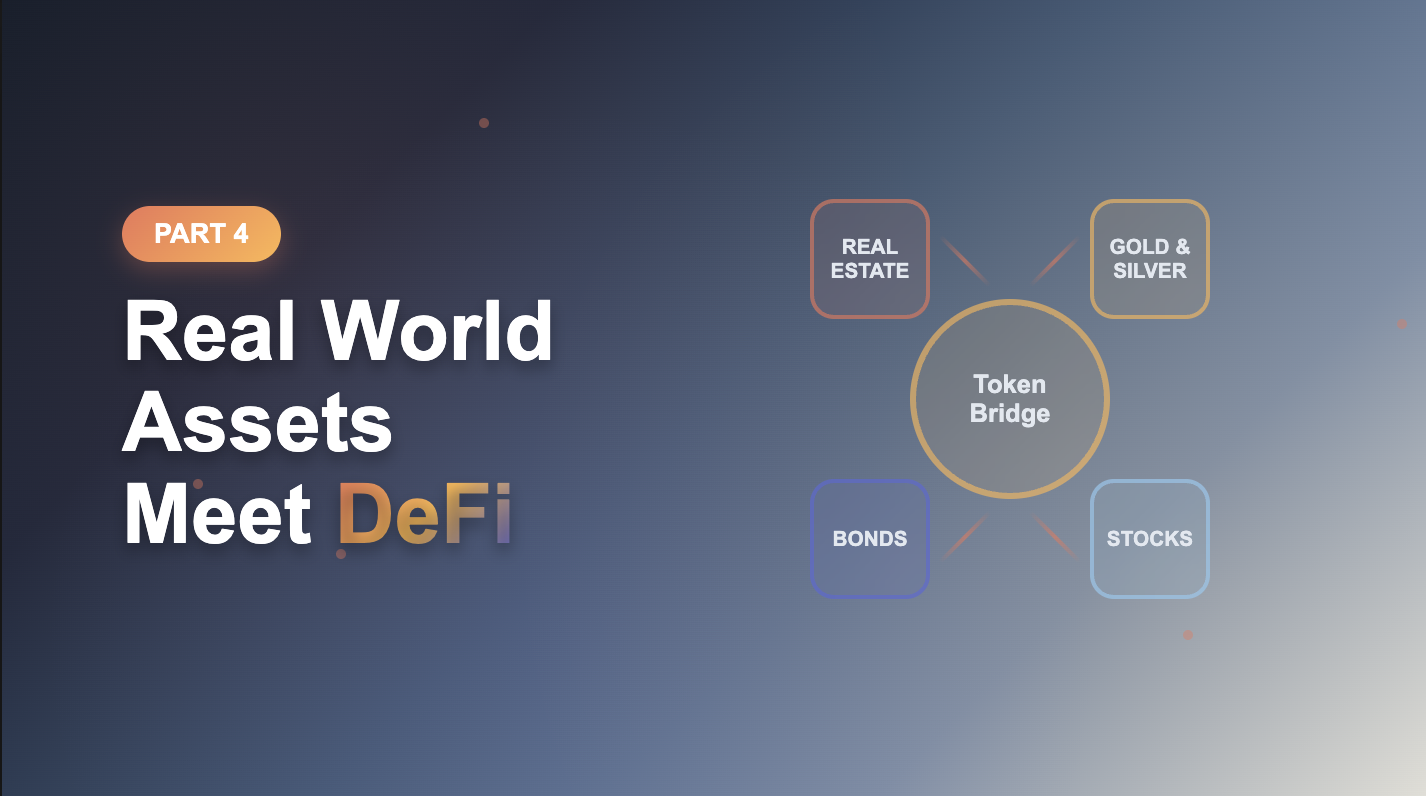
    This means creating a bridge between the physical world and the digital one.

    Someone needs to verify the asset, hold it safely, and create a digital version of it on-chain.

    That digital token is what DeFi apps can then use for trading, lending, borrowing, or earning.

    Without this connection, real-world assets cannot interact with DeFi tools. The token must reflect the real thing clearly and must be backed by trust.

    You Can Make These TODAY!

    The exciting part is that tokenizing real-world assets isn’t just for big corporations or tech gurus. With the right platforms and knowledge, individuals and businesses can also participate in creating these digital representations of physical assets today. The process generally involves a few key steps. First, the real-world asset needs to be legally verified and appraised to determine its value and ownership. This is a crucial step to ensure that the digital token accurately reflects the physical asset. Once verified, the asset is then ‘tokenized’ on a blockchain.

    This means a smart contract is created that represents the asset, and digital tokens are issued. These tokens can then be bought, sold, or traded on various blockchain platforms. While it might sound complex, many platforms are emerging that simplify this process, making it more accessible for a wider audience. This means that the potential for bringing real-world value onto the blockchain is immense, and it’s happening right now, opening up new avenues for investment and ownership.

    Key Benefits of RWA + DeFi

    1. New Investment Opportunities: Tokenized real-world assets make high-value assets (like real estate, art, etc.) more accessible to everyone, lowering the barrier to entry for investments.
    1. Increased Liquidity: Traditionally illiquid assets can be bought and sold almost instantly on a global market, allowing for quicker transactions and easier access to asset value.
    1. Enhanced Transparency and Security: Blockchain technology ensures that every transaction is recorded on an immutable ledger, reducing fraud and increasing trust in asset ownership and transfer.
    1. Innovative Financial Products: The integration of RWAs with DeFi platforms enables new financial services, such as using tokenized real estate as collateral for loans or participating in decentralized exchanges with real-world backed assets.

    Popular RWA Projects in DeFi

    1. Centrifuge – Brings real-world loans (like invoices) to DeFi
    1. Goldfinch – Offers loans to real businesses in emerging markets
    1. Maple – Lets institutions borrow on-chain
    1. Ondo – Tokenizes US Treasuries for yield

    Challenges to Watch

    • Legal rules are not clear yet
    • Need for trusted middlemen to hold the real asset
    • Hard to scale across countries
    • Price feeds and real-world data must be accurate

    Final Thoughts

    Real World Assets will bring real growth to DeFi.

    They connect blockchain to the world we live in.

    And they give DeFi a chance to solve real problems, not just trade tokens.
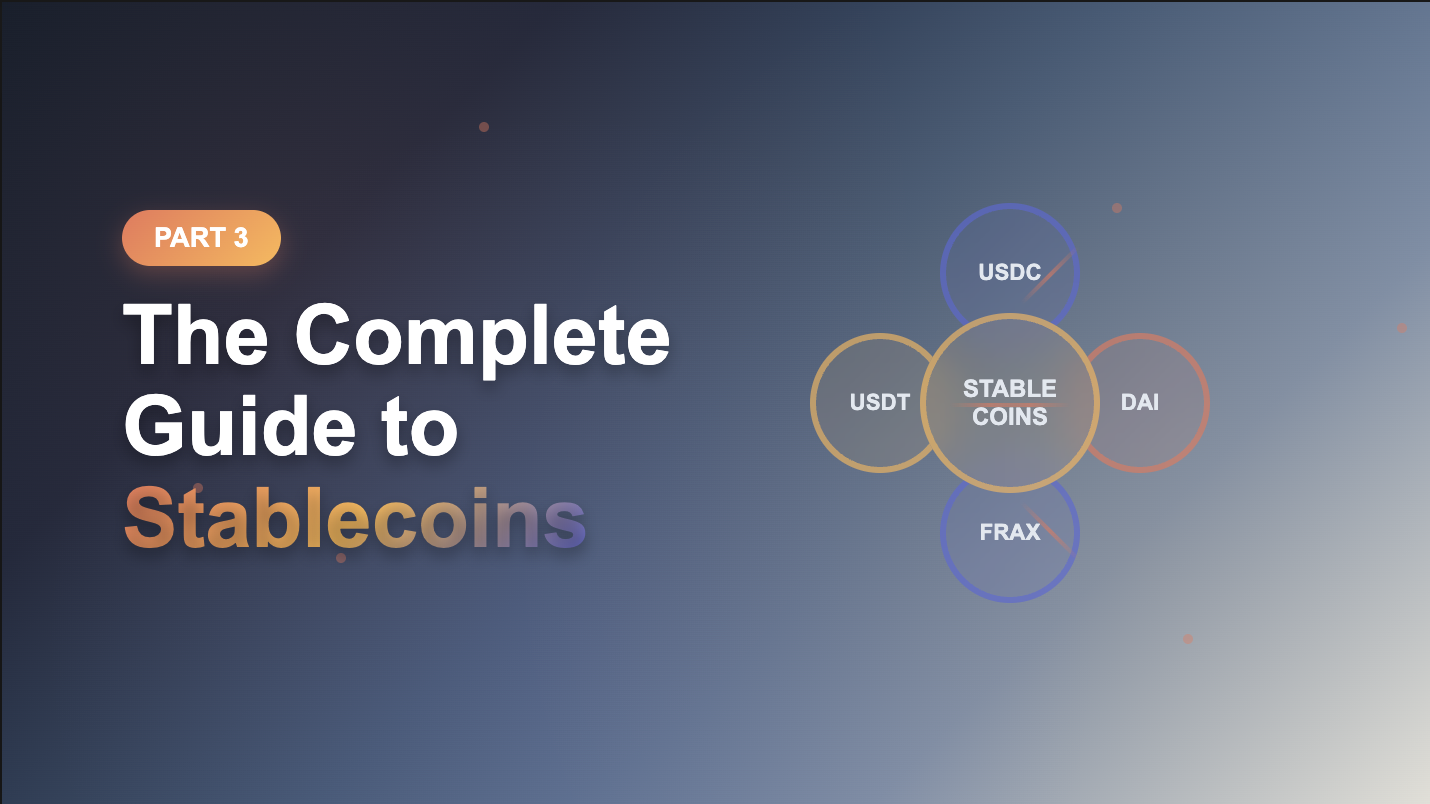
  • Decentralized Finance Part 3: The Complete Guide to Stablecoins

    Decentralized Finance Part 3: The Complete Guide to Stablecoins

    The Problem That Started It All

    Imagine you bought a cup of coffee with Bitcoin six months ago. Back then, it cost you 0.0001 BTC. Today, that same amount of Bitcoin could buy you either half a cup or three cups, depending on Bitcoin’s wild price swings. But if you paid with dollars six months ago and pay with dollars today, you’d pay roughly the same amount. This is the fundamental problem that stablecoins solve.

    What Are Stablecoins?

    Most people think stablecoins are simply “non-volatile crypto assets.” This definition is wrong.

    The correct definition: A stablecoin is a crypto asset whose buying power fluctuates very little relative to the rest of the market.

    The keyword here is “buying power.” It’s not about price stability, it’s about purchasing power stability. A stablecoin should let you buy roughly the same amount of goods today as you could yesterday, next week, or next month.

    Why Do We Care About Stablecoins?

    Money serves three critical functions, and understanding these explains why stablecoins matter:

    1. Store of Value

    Money should preserve your wealth over time. When you save money in a bank or invest in stocks, you expect it to maintain its purchasing power. Volatile assets like Bitcoin fail at this because your wealth can disappear overnight.

    2. Unit of Account

    Money should help us measure how valuable something is. We price Bitcoin in dollars, not the other way around, because Bitcoin’s constant price changes make it a poor measuring stick. Nobody wants to price their business in Bitcoin when it could be worth 50% less tomorrow.

    3. Medium of Exchange

    Money should facilitate transactions. While you can technically buy groceries with Bitcoin, most people won’t because they don’t want to spend an asset that might double in value next week.

    The Web3 Money Problem: Ethereum works great as a store of value and medium of exchange, but fails as a unit of account due to its volatile nature. We need Web3 money that can do all three functions reliably

    Categories and Properties of Stablecoins

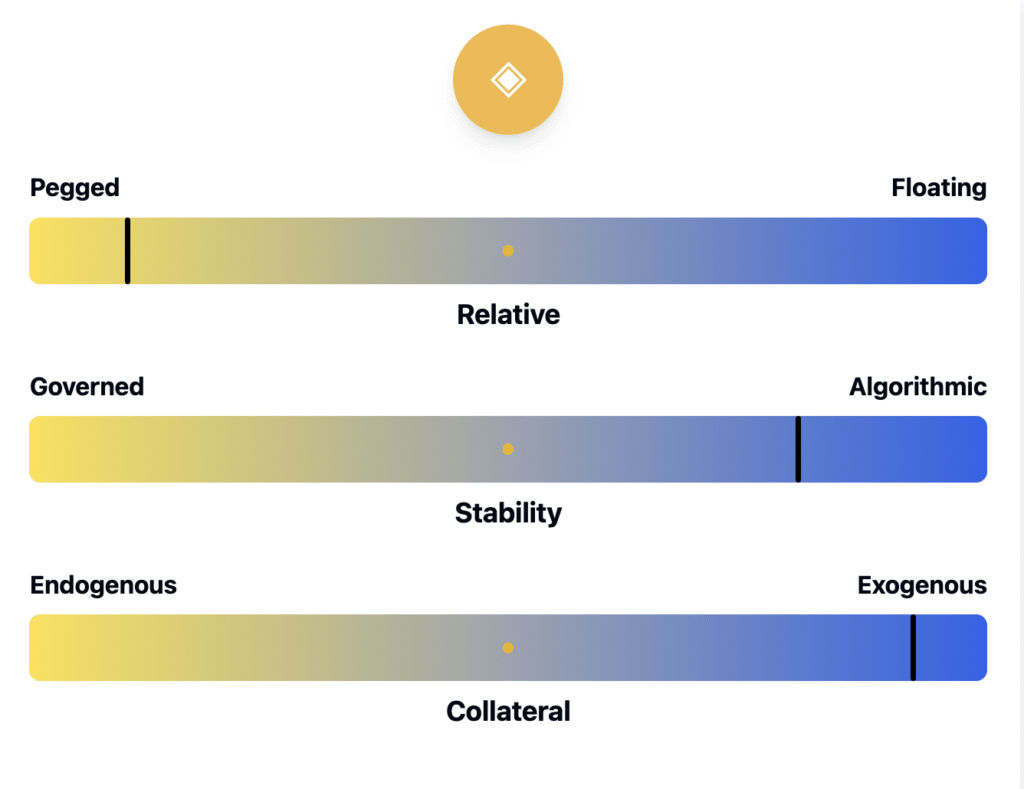
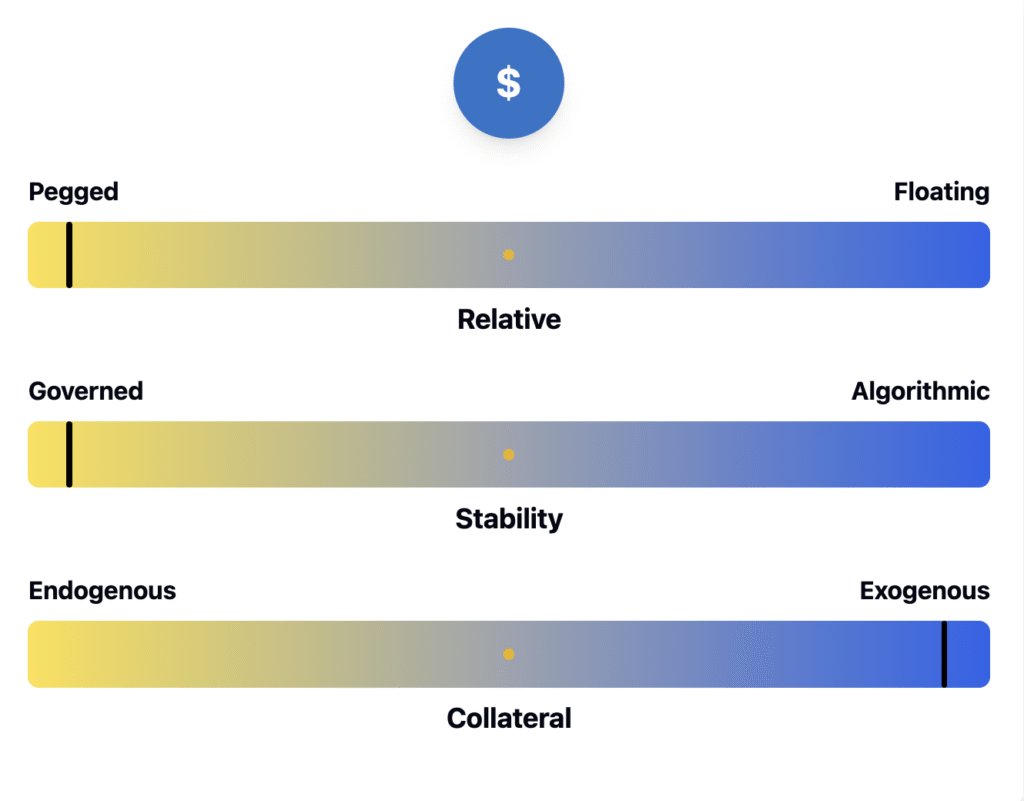
    1. Relative Stability: Pegged/Anchored or  Floating

    Pegged  Stablecoins: These are tied to another asset’s value. Most popular stablecoins fall into this category:

    • Tether (USDT): 1 USDT = 1 USD
    • USD Coin (USDC): 1 USDC = 1 USD

    Floating Stablecoins: These maintain stable buying power without being tied to any specific asset. Think of it this way: if you could buy 10 apples with 10 dollars five years ago, but today you can only buy 5 apples with 10 dollars due to inflation, a floating stablecoin would adjust so you can still buy 10 apples with the same amount.

    Anchored Stablecoins: These are pegged to a specific reference point that moves over time. Think of it like measuring ocean levels, where the anchor point itself changes but the relationship remains stable.

    2. Stability Method: Governed vs Algorithmic

    This refers to who or what controls the minting and burning of stablecoins to maintain their peg.

    Governed Stablecoins: Humans or organizations decide when to create or destroy tokens. These are typically centralized:

    • A government entity
    • A company (like Circle for USDC)
    • A decentralized autonomous organization (DAO)

    Algorithmic Stablecoins: Smart contracts automatically mint and burn tokens based on predetermined rules. No human intervention required:

    • DAI (partially algorithmic)
    • FRAX
    • RAI
    • UST (failed example)

    3. Collateral Type: Endogenous vs Exogenous

    This describes what backs the stablecoin’s value.

    Exogenous Collateral: Backed by assets outside the stablecoin’s ecosystem:

    • USDC is backed by US dollars
    • DAI is backed by ETH, USDC, and other external assets

    If these stablecoins fail, their underlying collateral (dollars, ETH) continues to exist and function.

    Endogenous Collateral: Backed by assets within the same ecosystem:

    • UST was backed by LUNA tokens
    • If UST failed, LUNA would fail too (which actually happened)

    The relationship creates a reflexive loop where the stablecoin and its collateral depend on each other for value.

    The Endogenous Dilemma

    Endogenous collateral sounds risky, so why use it at all?

    The Answer: Capital Efficiency

    With exogenous stablecoins like USDC, you need to over-collateralize. To mint $100 worth of DAI, you might need to deposit $150 worth of ETH. This ties up a lot of capital.

    Endogenous stablecoins can theoretically operate with zero external collateral because they’re backed by their own ecosystem. This makes them highly capital efficient but also highly risky.

    Check out these visuals to understand how some of the most well-known stablecoins are built and how they work

    (DAI StableCoin)

    ( USDC StableCoin)

    (RAI StableCoin)

    What Stablecoins Really Do

    Beyond just maintaining stable value, stablecoins serve as:

    Financial Infrastructure: They enable DeFi protocols to function with predictable unit pricing.

    Bridge Between Traditional and Crypto: They allow seamless movement between fiat and crypto worlds.

    Yield Generation: Many stablecoins can be staked or lent to earn interest.

    Global Access: They provide dollar-equivalent access to people in countries with unstable currencies.

    Which Stablecoins Are Good?

    For Safety and Reliability:

    • USDC: Highly regulated, transparent reserves
    • DAI: Decentralized, over-collateralized, battle-tested

    For Innovation:

    • RAI: Truly algorithmic, not pegged to fiat
    • FRAX: Hybrid model balancing efficiency and stability

    Trade-offs to Consider:

    • Centralized stablecoins (USDC) offer stability but can be frozen or regulated
    • Decentralized stablecoins (DAI, RAI) offer censorship resistance but may have slight fees and complexity
    • Algorithmic stablecoins offer capital efficiency but carry higher risks

    The Future of Stablecoins

    The stablecoin landscape continues evolving as projects balance three competing priorities:

    1. Stability – Maintaining purchasing power
    2. Decentralization – Avoiding central points of failure
    3. Capital Efficiency – Maximizing utility of locked assets

    The most successful stablecoins will likely be those that find the optimal balance between these three factors while serving the core functions of money in the digital age.

    Before you use or build with stablecoins, take the time to understand how they’re designed. The more you know, the better decisions you’ll make in the Web3 world.

  • Decentralized Finance Part 2: Money Markets

    Decentralized Finance Part 2: Money Markets

    Banks have controlled lending and borrowing for centuries. They decide who gets loans, set the interest rates, and hold all the power. If your credit score isn’t perfect or you don’t have the right paperwork, you’re out of luck.

    DeFi Money Markets flip this system completely upside down.

    No credit checks. No paperwork. No waiting weeks for approval.

    Just deposit your crypto as collateral, and borrow instantly. The smart contract handles everything else.

    What Are DeFi Money Markets?

    DeFi money markets are lending platforms built on smart contracts.

    They allow users to:

    • Lend crypto and earn interest – Deposit your tokens and get paid for lending them out
    • Borrow crypto and pay interest – Put up collateral and borrow different tokens

    The most popular platforms include Aave, Compound, and others.

    But here’s the catch:

    You can’t borrow unless you first deposit something valuable.

    This is called collateral.

    Traditional Borrowing vs DeFi

    In traditional loans, you get money based on:

    • Your salary
    • Credit score
    • Personal background

    In DeFi, none of that matters.

    The only thing that matters is how much you deposit as collateral.

    How Collateral-Based Borrowing Works

    The Collateral System

    In DeFi, collateral is your security deposit. It’s like leaving your car keys with a friend when you borrow their bike. If you don’t return the bike, they keep your keys.

    Here’s a simple example:

    • You deposit 1,000 USDC as collateral
    • You can then borrow 800 DAI (or ETH worth $800)
    • You can’t borrow more than you deposited
    • Your collateral stays locked until you repay the loan

    DeFi Money Markets Glossary

    Collateral

    The crypto you deposit as security to borrow other tokens. If you deposit 1 ETH to a protocol, your collateral is 1 ETH.

    Loan-to-Value (LTV) Ratio

    LTV determines how much you can borrow compared to your collateral value. It’s expressed as a percentage.

    Example with 75% LTV:

    • You deposit 1 ETH worth $1,000 as collateral
    • You can borrow up to 0.75 ETH worth of other tokens (or $750 worth)
    • The protocol keeps 25% as a safety buffer

    Different tokens have different LTV ratios based on their stability and risk.

    The Liquidation Threshold

    Liquidation happens when your borrowed amount becomes too risky compared to your collateral. It’s the protocol’s way of protecting itself and other users.

    Common triggers:

    • Your collateral drops in value (ETH price falls)
    • Your borrowed asset rises in value (borrowed token pumps)
    • You borrow too close to your limit

    How Liquidation Works

    When you cross the liquidation threshold:

    1. Liquidators step in – These are users who “buy” your debt
    2. You pay a penalty – Usually 5-10% of your collateral value
    3. Your collateral gets sold – To cover the borrowed amount
    4. You keep the rest – Any remaining collateral after paying debt and penalty

    The warning system: Most protocols show you a “health factor” that warns you before liquidation happens.

    Annual Percentage Yield (APY)

    The yearly return on your investment, including compound interest. If you earn 10% APY, your money grows by 10% over one year with compounding.

    Annual Percentage Rate (APR)

    The yearly cost of borrowing without compound interest. If you pay 8% APR, you pay 8% interest over one year on the original loan amount.

    Receipt Token

    A special token you receive when depositing into a protocol. It’s like a receipt that proves you deposited funds. These tokens are minted when you deposit and burned when you withdraw.

    Reserve/Underlying Asset

    The actual token you deposited into the protocol. For example, if you deposit ETH into AAVE, WETH is the underlying token, and you receive aWETH receipt tokens.

    Key Benefits of DeFi Money Markets

    For Lenders:

    • Earn passive income on idle crypto
    • No minimum deposit requirements
    • Withdraw anytime (subject to liquidity)
    • Transparent interest rates

    For Borrowers:

    • No credit checks or paperwork
    • Instant loan approval
    • Keep your crypto exposure while borrowing
    • Access to leverage trading strategies

    AAVE: The largest lending protocol with innovative features like flash loans and rate switching.

    Compound: Pioneer in DeFi lending with simple, reliable mechanics.

    MakerDAO: Focused on DAI stablecoin creation through collateralized debt positions.

    Conclusion

    DeFi money markets represent a fundamental shift in how we think about lending and borrowing. They remove gatekeepers, reduce costs, and provide global access to financial services.

    The power is now in your hands. No banker can reject your loan application. No credit agency can block your access. Just you, your crypto, and the smart contract.

    But with great power comes great responsibility. Understanding collateral, liquidation, and risk management is essential before diving in.

  • Decentralized Finance Part 1: Understanding DEXs and AMMs

    Decentralized Finance Part 1: Understanding DEXs and AMMs

    A few years ago, if you wanted to buy or sell crypto, you had to go through a central exchange. You’d sign up, verify your identity, and trust the platform to keep your money safe.

    Then came Decentralized Exchanges (DEXs), a new way to trade crypto without giving up control.

    No sign-ups. No middlemen. No waiting for someone on the other side.

    Just you, a wallet, and a smart contract.

    This is the revolutionary promise of Decentralized Finance (DeFi), where smart contracts handle everything automatically. Today, we’ll explore the foundation of DeFi: Decentralized Exchanges (DEXs) and the magic behind them

    What is a Decentralized Exchange (DEX)?

    A Decentralized Exchange (DEX) lets you trade one token for another, directly from your wallet. There’s no company holding your money. Instead, smart contracts handle everything.

    You connect your wallet. You choose what you want to swap. And the trade happens instantly.

    How Does a DEX Actually Work?

    Let’s break down the key components that make DEXs possible:

    1. Liquidity Pools

    A liquidity pool is like a jar filled with two tokens. For example:

    • 50 ETH and
    • 10,000 DAI

    People add their tokens to these pools. These people are called liquidity providers, and they earn small fees from every trade that happens.

    2. Swapping

    You want to swap your DAI for ETH?

    The smart contract pulls ETH from the pool and adds your DAI to it.

    The price changes based on how much you take and how much you give.

    3. Automated Market Maker (AMM): The Price Calculator

    Here’s where it gets interesting. Instead of matching you with another trader (like in traditional markets), an AMM uses a mathematical formula to determine prices instantly. It’s like having a calculator that always knows the fair price based on how much of each token is in the pool.

    4. Small Fees, Big Rewards

    Every trade pays a small fee (typically 0.3%). This fee gets distributed among all the people who provided liquidity to that pool. It’s like getting a cut of every transaction just for helping keep the marketplace running.

    Understanding Liquidity and Why It Matters

    What is Liquidity? Liquidity is simply having enough tokens in a pool to make trading smooth and efficient. Think of it like having enough cash in your wallet to buy coffee without needing to break a $100 bill.

    Why Do We Need It? Without enough liquidity, strange things happen:

    • Trades become slow and expensive
    • Prices swing wildly with small purchases
    • Large trades become nearly impossible

    Who Benefits?

    • Traders get fast, reliable swaps
    • Liquidity providers earn passive income from fees
    • The entire ecosystem stays healthy and functional
    1. PancakeSwap – Built on Binance Smart Chain. Fast and great for beginners.
    2. SushiSwap – Available on many chains. It rewards people who add liquidity.

    There are many more. Each one has its own pools, tokens, and features.

    DEX vs CEX: Choose Your Adventure

    Centralized Exchange (CEX):

    • Requires account creation and identity verification
    • Company holds your funds
    • Easy to use with familiar interfaces
    • Customer support available

    Decentralized Exchange (DEX):

    • No signup required
    • You always control your funds
    • More privacy and anonymity
    • Full responsibility for your own security

    The Bottom Line: Want complete control and privacy? Go with a DEX. Prefer simplicity and support? Choose a CEX.

    How Automated Market Makers Work

    An Automated Market Maker (AMM) is a smart contract that lets you swap tokens without needing someone else on the other side.

    Let’s Break Down the Formula

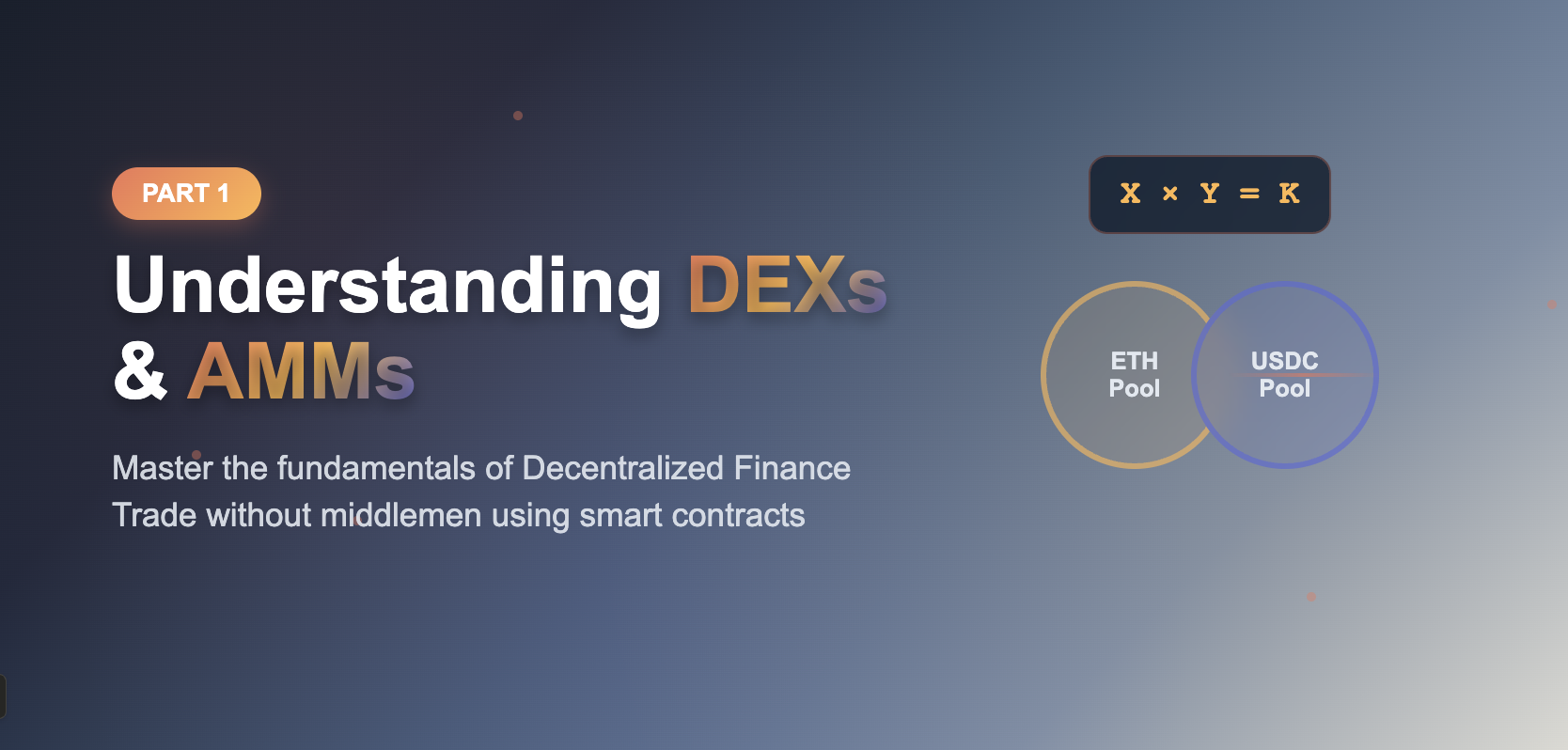
    X × Y = K

    • X = Amount of Token 1 in the pool
    • Y = Amount of Token 2 in the pool
    • K = A constant number that never changes

    Think of K as the pool’s “balance point.” No matter how much trading happens, the formula ensures X × Y always equals K.

    A Real-World Example

    Let’s say we have a pool with:

    • 50 ETH (Token 1)
    • 10,000 DAI (Token 2)
    • K = 50 × 10,000 = 500,000

    Now imagine you want to buy 1 ETH using DAI.

    After your trade:

    • ETH remaining = 49 (you took 1 ETH out)
    • To keep K = 500,000, we need: 49 × Y = 500,000
    • Y = 500,000 ÷ 49 = 10,204.08 DAI

    Since the pool started with 10,000 DAI and needs 10,204.08 DAI after your trade, you must add 204.08 DAI to buy 1 ETH.

    The price was calculated automatically by the formula, not by a person!

    Why Prices Change as You Trade

    Here’s where it gets interesting. The more ETH you try to buy, the more DAI you need to add to keep K constant. This makes each additional ETH more expensive.

    Example:

    • Buying 1 ETH costs ~204 DAI
    • Buying 2 ETH would cost even more per ETH
    • Buying 10 ETH would be extremely expensive per ETH

    This price increase is called “slippage,” and it’s completely normal in AMMs. It prevents any single person from draining the entire pool

    This price jump is called slippage, the more you buy, the more you pay.

    AMM vs Order Book

    • Order Book (used by CEX): Buyers and sellers agree on a price
    • AMM (used by DEX): The price is decided by a formula

    In AMMs, you don’t wait for someone to match your trade.

    The pool is always ready, the formula handles everything.

    Key Takeaways

    1. DEXs eliminate middlemen – You trade directly through smart contracts
    2. Liquidity pools are the foundation – They provide the tokens needed for smooth trading
    3. AMMs use simple math – The X × Y = K formula determines all prices
    4. Everyone benefits – Traders get instant swaps, providers earn fees
    5. You stay in control – Your funds never leave your wallet

    In Part 2, we’ll explore money markets