Tag: Web3

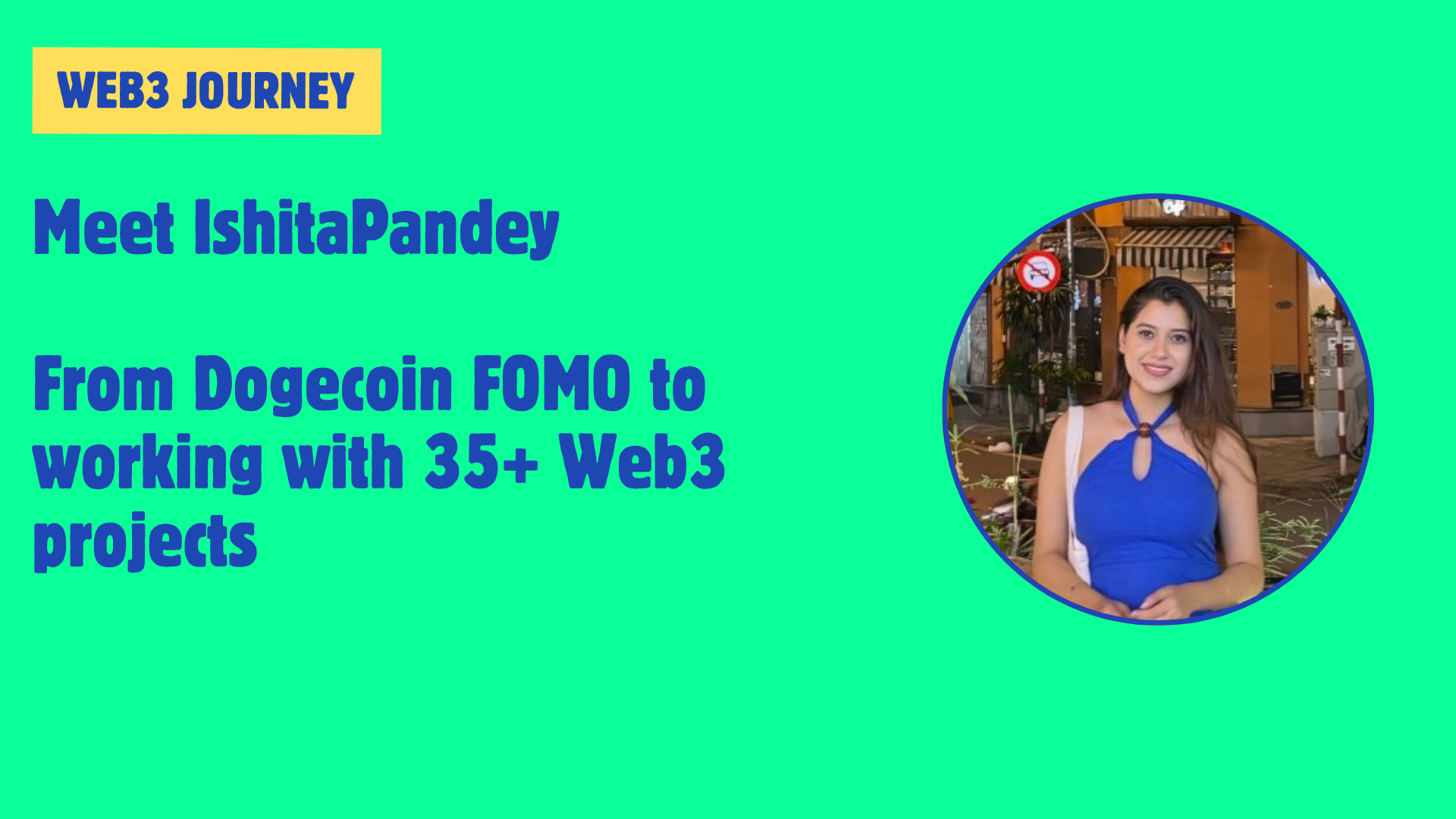
  • Meet Ishita Pandey: From Dogecoin FOMO to Building career as a Web3 Marketer

    Meet Ishita Pandey: From Dogecoin FOMO to Building career as a Web3 Marketer

    Some stories begin with a dream.
    Ishita’s began with… Dogecoin.

    What looked like a random FOMO purchase at the peak quickly became the spark that pulled her into a world of memes, builders, and unstoppable creativity. What started as curiosity on Twitter in 2021 turned into a career that reshaped her life long before she graduated college.

    Today, Ishita is one of the rising voices in Web3 content and community storytelling, shaping narratives, humanizing projects, and helping brands show up in ways that actually feel real.
    Her journey is proof that you don’t need a technical background to leave your mark in crypto; you just need the courage to show up, experiment, and stay when most people quit.

    This conversation with Ishita reveals the human side of Web3 marketing, the instability, the chaos, the creativity and how one creator turned her curiosity into a career impacting 35+ projects across the ecosystem.

    Meet Ishita Pandey: From Dogecoin FOMO to Building career as a Web3 Marketer

    The Interview: Ishita’s Web3 Journey

    1. Tell us a bit about yourself. 


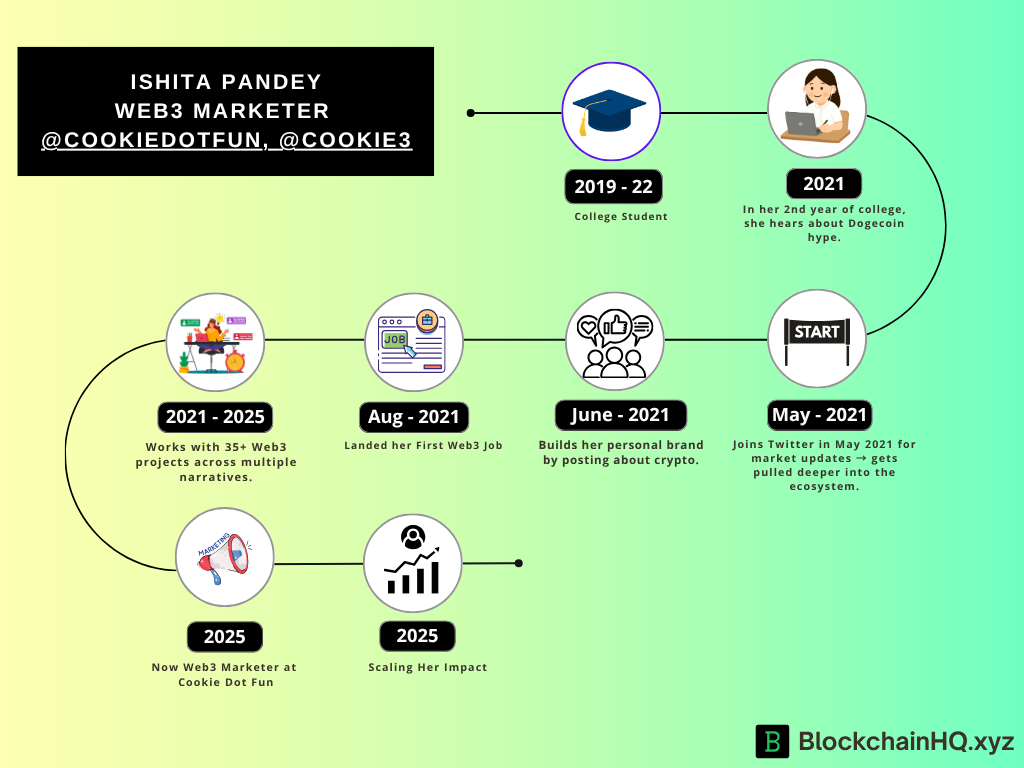
    I’m Ishita, I’m from India. I’ve been working in crypto since 2021, started out in my 2nd year of college as a social media manager and since then, I’ve worked with 35+ projects, helping them grow through marketing and community strategies

    2. What were you doing before Web3? 


    Honestly, I was just a college student before Web3 took over my life.

    3. How did you first hear about Web3? 


    It all started with Dogecoin. I jumped in at its ATH purely out of FOMO. I joined Twitter to stay updated with the market, but ended up getting deeper into the space. Over time, I started building my personal brand around crypto, and that’s what eventually helped me land my first job as a social media manager in Web3.

    4. What kind of content or marketing work do you focus on in Web3?


    I mostly focus on content and shitposting, blending storytelling, memes, and community-driven posts to make projects feel more human and relatable. I believe good shitposting is a form of marketing when done right,  it builds authenticity and connection without feeling forced.

    5. What inspired you to start creating in this space?

    I never aimed for a corporate life but always wanted a space where I could show my creativity and crypto was exactly what I was looking for. Everyone was building, memeing, experimenting, and I wanted in. I started creating just to be part of the conversation, and somewhere along the way, it turned into my thing

    6. What’s the biggest challenge you’ve faced as a creator/marketer in Web3?

    Honestly, the hardest part has been keeping up. Things change overnight: algorithms, narratives, trends, even platforms. One day, your content does great, the next it flops for no reason and the same goes for the narrative one day a specific narrative is trending and a few days later no one is talking about it. It gets exhausting trying to stay consistent and updated without burning out.

    7. What are you most proud of so far in your journey?


    I’m really proud of the journey I’ve had so far. Working with over 35 projects across so many different narratives has taught me a ton about the space. At the same time, I’ve been building my own personal brand from scratch, which has been its own challenge and reward. Juggling both has pushed me to grow faster than I ever expected, and it’s exciting to see the impact of the work I’ve put out there

    8. What’s one piece of advice you’d give to someone starting as a Web3 creator or marketer?

    My biggest tip for anyone starting in Web3 is just: show up. Be consistent, post, engage, experiment and keep an eye on what’s trending. This space moves so fast; if you’re not there, you’re missing the wave. It’s not about being the smartest; it’s about being everywhere at the right time.

    9. Who are some creators or marketers in Web3 you admire or take inspiration from?


    I really like what Zac is doing with Kast, previously with Phantom and Alex’s shitposting skills at Coinbase

    10. Where can people find or follow your work? 

    You can find me shitposting on Twitter/X: https://x.com/IshitaaPandey

    11. What is that thing/challenge you would like to change in Web3-Crypto industry?

    If I could change one thing in the Web3/Crypto space, it would be the instability. Right now, the market moves so unpredictably that it becomes a huge hurdle for mainstream adoption. I’d love to see more stability, because that’s what will let projects and communities grow sustainably and attract people who are still hesitant to enter the space.

    From buying Dogecoin at the top to working with 35+ Web3 projects, Ishita’s story shows that you don’t need the perfect plan to start, you just need to show up.
    Her journey proves one thing: consistency is a superpower in a space where trends flip overnight.

    She didn’t wait to become an expert.
    She built, posted, engaged, experimented and the industry noticed.

    If you want to see real, unfiltered Web3 storytelling in action, follow Ishita on X (@IshitaaPandey).

    Join the BlockchainHQ community where builders share knowledge, collaborate on projects, and support each other’s growth. Sign up and follow us on X to become part of our invite-only Telegram community where the real conversations happen.


  • Meet Aditi Polkam: Building, Breaking, and Shipping in Web3

    Meet Aditi Polkam: Building, Breaking, and Shipping in Web3

    A Web2 intern who dabbled in crypto trading during lockdown is now building across the Web3 ecosystem. Her secret? Stop waiting to be ready and start experimenting.

    Aditi Polkam’s entry into Web3 wasn’t through a grand epiphany or a prestigious program. It started with lockdown curiosity about crypto trading and evolved into writing technical content for a Web3 company. What followed was a journey of constant experimentation, countless failures, and the realization that building in public is more valuable than waiting for perfection.

    Her path from technical writer to fullstack developer to hackathon winner shows something important about Web3: there’s no single right way in. While others might obsess over learning every acronym and tool, Aditi focused on one thing at a time, built projects that broke, fixed them, and shipped anyway.

    What sets her apart isn’t just her technical skills. It’s her honest acknowledgment that feeling lost is normal in Web3, and that the overwhelming information overload everyone talks about is real. Instead of pretending otherwise, she leaned into fundamentals, found her community, and kept building even when projects failed.

    At Offline Protocol, she continues to explore new technologies hands-on, but her real contribution might be her philosophy: experimentation is underrated. Most growth doesn’t come from following a perfect roadmap. It comes from trying things, breaking things, and iterating until something works.

    Meet Aditi Polkam: Building, Breaking, and Shipping in Web3

    The Interview: Aditi’s Web3 Journey

    1. Tell us a bit about yourself.

    Aditi: Hey, I’m Aditi. I’m from India and currently working with Offline Protocol while also experimenting with projects across the Web3 space. Most of what I do is about exploring new technologies, trying them hands-on, and figuring out how they can be applied in real-world scenarios. I enjoy building things, contributing to projects, and constantly learning along the way.

    2. What were you doing before Web3?

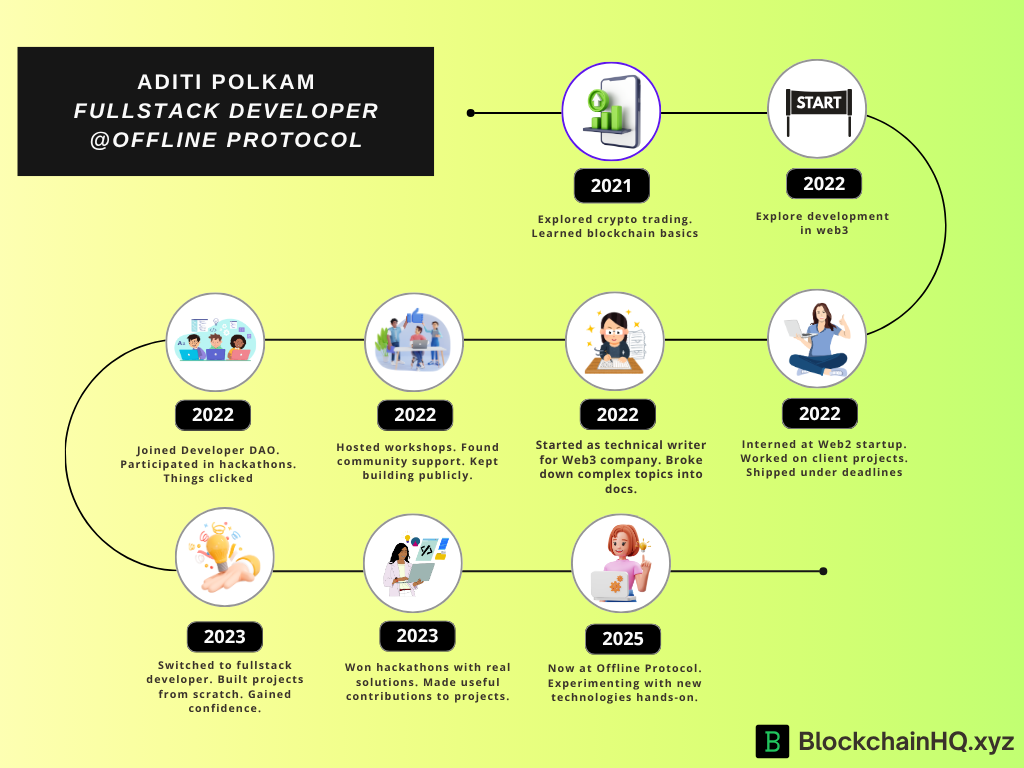
    Aditi: Before Web3, I was interning at a Web2 startup where I got to work on multiple client projects. It gave me a lot of exposure to how software is built in the real world and what it means to ship things under deadlines. Around that time, I also got the opportunity to write technical content for a Web3 company. That felt like an interesting entry point, so I took it — and that’s how I slowly transitioned from just “observing Web3 from the outside” to actively contributing to it.

    3. How did you first hear about Web3?

    Aditi: I already had some idea about crypto during the lockdown – I was experimenting with trading and exploring the basics of how blockchains worked. But my actual journey into Web3 development started a year later, around 2022. That’s when I realized there’s a huge difference between knowing crypto as a user and actually building things that power this ecosystem.

    4. What was your first step into the space?

    Aditi: My very first step was as a technical writer for a Web3 company. I learned a lot while breaking down complex topics into articles and docs. Later, I switched into a more hands-on role as a fullstack developer at a startup, which gave me the confidence to actually build projects from scratch. And eventually, I started participating in hackathons, contributing to DAOs, and joining communities like Developer DAO – that’s where things really clicked for me.

    5. What was one big challenge you faced early on?

    Aditi: The biggest challenge was honestly the overwhelming amount of information. Everyone in Web3 talks in acronyms, there are hundreds of tools, and things evolve at lightning speed. It was easy to feel lost or feel like I didn’t belong because there was always someone who seemed to know more. There were moments where I wondered if I was even cut out for it.

    6. What helped you push through?

    Aditi: Two things really helped: a strong desire to learn the basics and community support. I knew I couldn’t skip fundamentals, so I made it a point to dig deeper even if it took extra time. At the same time, being part of communities, hosting workshops, and interacting with like-minded builders encouraged me to keep going. The combination of curiosity and peer support kept me motivated.

    7. What are you most proud of so far in your journey?

    Aditi: A few things stand out:

    • Winning hackathons with projects that actually solved problems.
    • The contributions I’ve made to projects that people found useful.
    • Transitioning from being “just curious” to someone who can actually build and ship.

    Those moments of recognition, whether through a prize or just a “this is cool” from someone, are what I look back on with pride.

    8. Any major failure or learning moment?

    Aditi: Plenty. I’ve had projects that didn’t ship on time, experiments that completely broke, and even ideas that never really took off. But every one of those experiences taught me something – whether it was how to plan better, how to debug smarter, or just how to be okay with things not working out the first time. I think failures in Web3 are just learning curves disguised in fancy clothes.

    9. What advice would you give to someone just starting out in Web3?

    Aditi: Don’t aim to “learn everything” at once – it’s impossible. Pick one area that excites you, whether it’s smart contracts, DAOs, or frontends for dApps, and start there. The rest will fall into place as you go. Also, don’t be afraid to build in public and ask questions. Three months from now, you’ll thank yourself for starting small instead of waiting to be “ready.”

    10. Where can people find or follow your work?

    Aditi: I’m most active on Twitter/X (@aditipolkam) and I share my projects and experiments on GitHub. That’s where you’ll see my latest updates, thoughts, and work.

    11. What is that thing/challenge you would like to change in Web3-Crypto industry?

    Aditi: A lot of companies are building technically sound and fancy products, but not something an average internet user would actually want to use. We need to bridge that gap – simplify UX, focus on real-world use cases, and make Web3 products less intimidating for non-crypto people. Until then, mainstream adoption will remain a buzzword.

    12. Do you want us to cover anything that we missed?

    Aditi: Maybe just this: experimentation is underrated. Most of what I’ve learned came from trying things, breaking things, and iterating — not from following a strict path. If you’re in Web3, don’t wait for perfect conditions. Start experimenting – that’s where the real growth happens.


    From lockdown crypto curiosity to building at Offline Protocol, Aditi’s story is a reminder that Web3 careers aren’t built on perfect preparation. They’re built on willingness to experiment, fail, learn, and ship anyway. Her advice to start small and build in public isn’t just motivational talk, it’s exactly how she built her own career.

    Ready to start your Web3 journey? Follow Aditi on X (@aditipolkam) and GitHub to see what happens when you stop waiting and start building.
    Want to build, learn, and grow in the Web3 space alongside like-minded developers? Join the BlockchainHQ community where builders share knowledge, collaborate on projects, and support each other’s growth. Sign up from here: https://blockchainhq.xyz/auth and follow us on X https://x.com/blockchainhqxyz to become part of our invite-only Telegram community where the real conversations happen.

  • From Stanford Campus to Leading Web3 Developer Relations at Celo

    From Stanford Campus to Leading Web3 Developer Relations at Celo

    A Stanford computer science student walks into an entrepreneur event and gets asked for her Twitter handle. Her response? “What’s Twitter?” Fast forward to today, and she’s now leading developer relations at Celo, one of the most important layer two blockchains focused on real world applications.

    Sophia’s rise in Web3 breaks every normal career path you’ve heard about. While most people enter this space through technical skills or investment backgrounds, she found it through pure curiosity and a willingness to explore new communities online.

    What makes her story remarkable is how not knowing about social media became the gateway to discovering an entirely new industry. From joining her first Web3 groups as a Stanford student to now leading developer relations at a major blockchain platform, her journey shows the surprising ways success can happen in this industry.

    At Celo, Sophia isn’t just managing developer relationships. She’s actively helping one of Ethereum’s most important layer two solutions connect with developers around the world. Her work focuses on real-world adoption and building applications that actually matter to people’s daily lives.

    Her story proves that Web3 success often comes from unexpected places and that community involvement can be just as important as technical skills. Through genuine curiosity about how technology impacts society, she built the foundation for a thriving career in one of the most exciting industries today.

    sophia inforgraphics

    The Interview: Sophia’s Web3 Journey

    1. Tell us a bit about yourself.

    Sophia: I’m Sophia. I am originally from the Bay Area, born and raised here, currently living here, and I am currently the developer relations lead at Celo, which is a layer two on Ethereum, and it’s a frontier chain scaling with real-world adoption and real-world apps.

    2. What were you doing before Web3?

    Sophia: I was still in school, so I went to Stanford for my undergrad. I studied computer science and product design, but I was super into different, like, just, like, building things. So I was always tinkering on different projects and different stuff. I even left school to run a startup full-time, and I was, yeah, just really into, like, figuring out what was cutting edge, what could I build, what could I create. I just loved products and creating and building products. And so I did that a lot while I was in school.

    3. How did you first hear about Web3?

    Sophia: I first heard about Web3 a little bit on Twitter. I was at an event for student entrepreneurs and on a panel for student entrepreneurs and they were talking about there’s a lot of people there that are really into Web3 and the intersection of future of tech. And afterwards they were like, Hey, like, can we follow you on Twitter? And I was like, what’s Twitter? And so I got on Twitter. I started following all these folks and everyone is very like Web3 focused. And I just got started getting involved in communities, a few different ones.

    4. What was your first step into the space?

    Sophia: A Web3 familia I think was one of the first ones and SheFi and yeah I just started really getting involved in some of these like web3 like I think web3 ladies was an early one I I did and it was really cool I learned so much this is like 2021 2022 and I was still in school at the time but it was just so cool getting to learn about all of these programs and then the first thing that actually brought me into the space officially was I went to ETH Denver and visited like I was staying at one of the hacker houses and I was just so impressed that like as a student they would take you to conferences and pay for you to your accommodations and you could win hackathon money it was just such a new eye-opening way for me so that’s definitely what got me originally in this space is just like like paying for travel.

    5. What was one big challenge you faced early on?

    Sophia: I would say, when I first was doing all these hackathons, I was really interested in building, but then as I was getting closer to graduating, I really wanted to figure out what job I wanted to do in the space. And so I set up like all these coffee chats. I would do like three coffee chats a day with people in the industry, just kind of talking about the different opportunities. And at the time, like I knew there was something I was so excited about, but I couldn’t exactly put my finger on what it was. And at the time it was like, oh, you can either do DeFi or NFTs or gaming or payments. and I was like, I don’t know, these specific areas I’m not that interested in but there’s like this intersection between Blockchain and society and how you know how cutting-edge tech is influencing the world that I was so excited about I couldn’t put my finger and articulate what exactly it was

    6. What helped you push through?

    Sophia: Eventually I discovered a Gitcoin and Gitcoin definitely led me down a path that I was really excited about.

    7. What are you most proud of so far in your journey?

    Sophia: Something I’m most proud of so far in my journey is joining Celo and getting to lead the developer relations team at Celo. So it was just so cool getting to go a little bit from like Gitcoin, which is a smaller team, and then I then, through Gitcoin, started leading Public Goods Network, which is also a chain, a blockchain. And I was running a lot of that, and it was a lot smaller. And when I then transitioned to Celo, it was like, it was so cool because like the stakes were a lot bigger.

    8. Any major failure or learning moment?

    Sophia: Honestly leading public goods networks that was one of the first OP stack L twos and I got to lead that and I learned how difficult it is to launch a chain… but the chain did shut down so it was also technically a major failure but I’m glad that it did shut down because I think not all chains need to yeah need to exist you don’t need to launch a change just for the sake of launching a chain.

    9. What advice would you give to someone just starting out in Web3?

    Sophia: I would say join a hackathon. I think that’s one of the most tangible ways to get involved in Web3… There’s so many diverse skill sets that are so appreciated in hackathons now from like marketing to coming up with the product idea to designing the thing to communicating what you’re building. There’s so many aspects and a lot of the coding I see is getting done with AI. So it’s like I feel like there’s less of a technical focus right now in hackathons and more of like a creative focus.

    10. Where can people find or follow your work?

    Sophia: And if anyone wants to find me or follow my work, the best place would probably be on X or on Twitter. My username is @sodofi_ or you can find me on Farcaster on: @sophia

    From not knowing what Twitter was to leading developer relations at one of the most important blockchains around, Sophia’s journey shows that Web3 success can come from the most unexpected beginnings. Her focus on community involvement, hackathon participation, and staying curious about how technology and society connect offers a clear path for anyone looking to build a meaningful career in this space. Through her work at Celo, she continues to prove that understanding people and communities is just as valuable as understanding code.

    Want to build, learn, and grow in the Web3 space alongside like-minded developers? Join the BlockchainHQ community where builders share knowledge, collaborate on projects, and support each other’s growth. Sign up from here: https://blockchainhq.xyz/auth and follow us on X https://x.com/blockchainhqxyz to become part of our invite-only Telegram community where the real conversations happen.

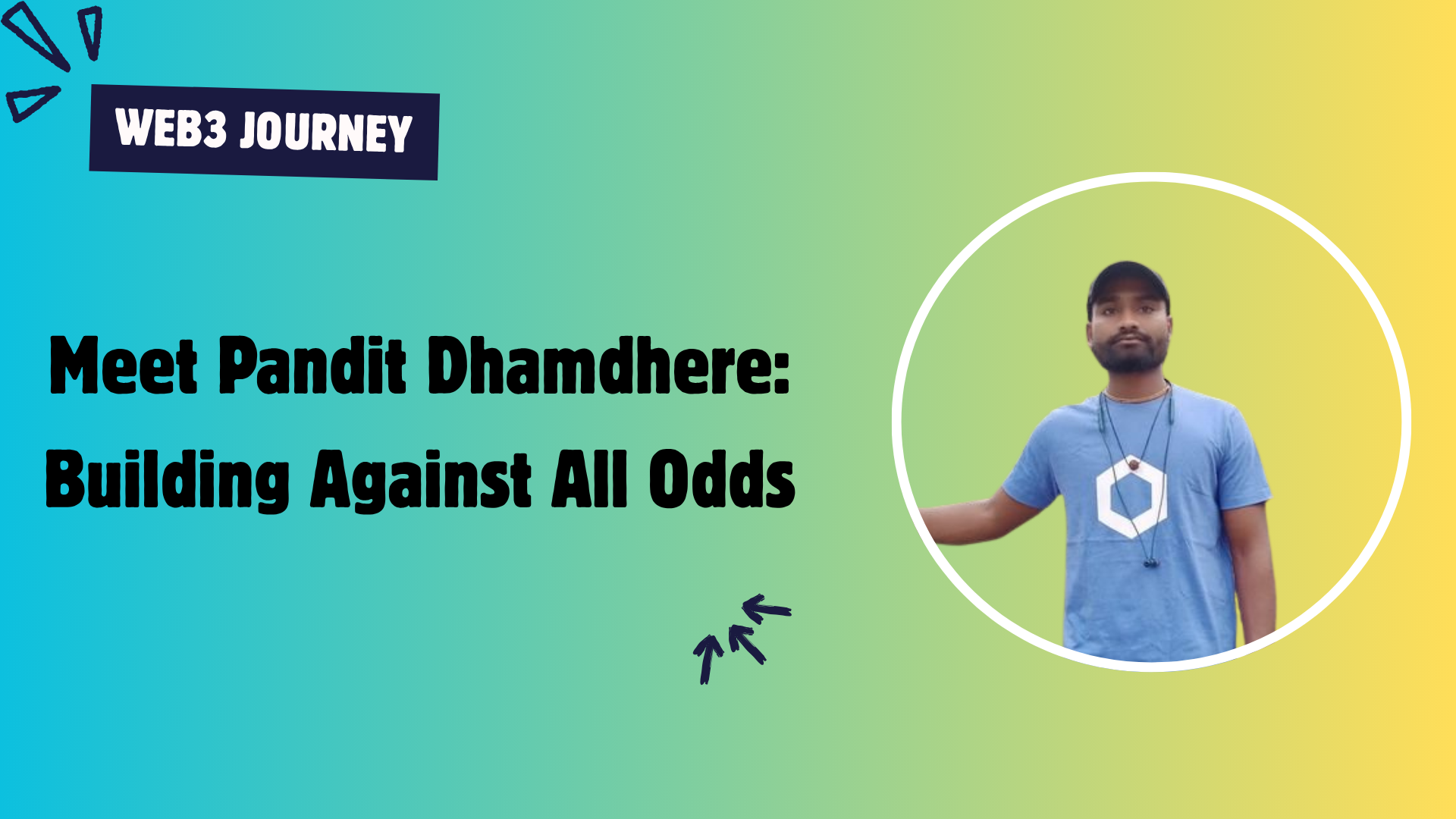
  • Meet Pandit Dhamdhere: Building Against All Odds

    Meet Pandit Dhamdhere: Building Against All Odds

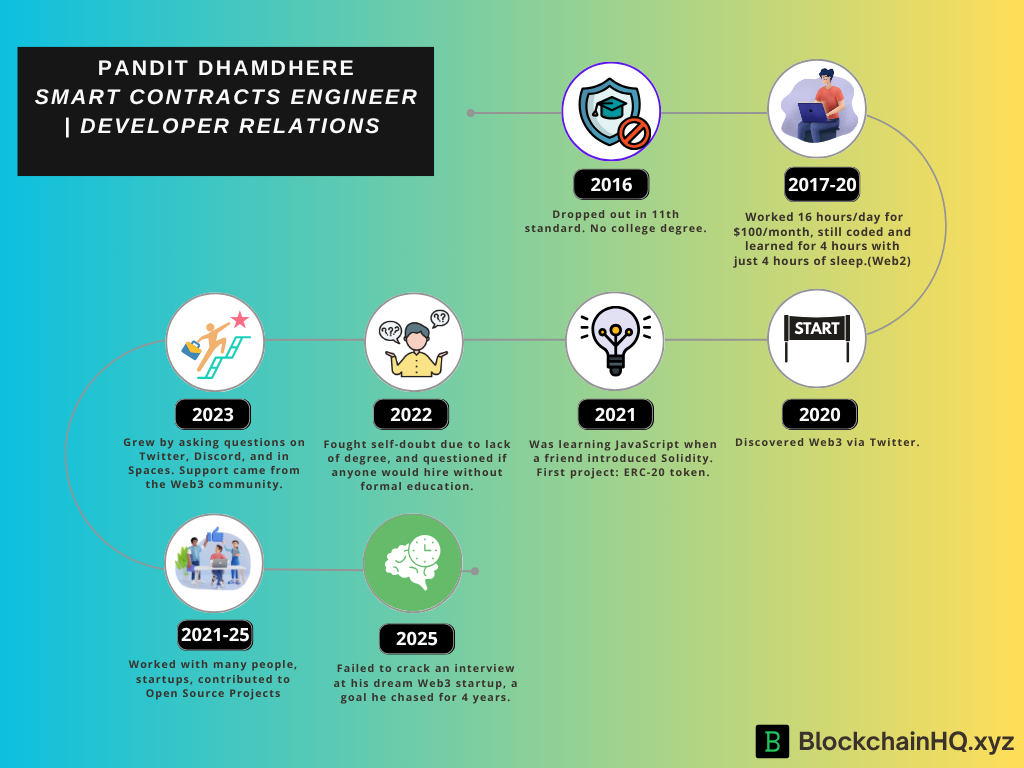
    In a quiet village in Pune district, far from any startup hubs or big tech campuses, a young man decided to teach himself how to code. With no degree, no formal training, Pandit Dhamdhere entered a space where talent and persistence mattered more than certificates. Today, despite a recent setback, his journey proves that passion and persistence can overcome even the most challenging circumstances.

    While working 16-hour days for $100 a month, he would spend another 4 hours at night learning JavaScript and Solidity, often sleeping only 4 hours before starting over again. In 2020, a single introduction to Web3 changed the direction of his life.

    Pandit’s journey is a reminder that in Web3, you don’t need perfect conditions, you need the courage to start and the persistence to keep going.

    This conversation with Pandit reveals the mindset needed to keep building despite self-doubt, the power of community in an online-first industry, and why sometimes the biggest battles aren’t with code but with your own limiting beliefs. His story is still being written, and the recent interview rejection that crushed his four-year dream might just be the setup for something bigger.

    The Interview: Pandit Dhamdhere on His Web3 Journey

    1. Tell us a bit about yourself.

    Pandit Dhamdhere: I’m Pandit Dhamdhere, and I’m from a village in Pune district, Maharashtra. I was recently laid off from the company I was working for, so currently I’m working part-time with many startups while building my own stuff.

    2. What were you doing before Web3?

    Pandit Dhamdhere: I’m a college dropout from 11th standard, and I come from a farming background. That was pretty much my reality before I discovered this space.

    3. How did you first hear about Web3?

    Pandit Dhamdhere: I first heard about Web3 on Twitter back in 2020. That’s where it all started for me.

    4. What was your first step into the space?

    Pandit Dhamdhere: While I was doing JavaScript and frontend stuff, a friend introduced me to Solidity. I loved it immediately and started with the basics. My first project was creating an ERC-20 token after doing the usual Hello World programs.

    5. What was one big challenge you faced early on?

    Pandit Dhamdhere: The challenge wasn’t really technical. It was a battle with myself. It was hard to believe in myself because I don’t have a degree. I used to think, “You’re learning and building, but who’s going to hire you when you don’t have a degree?” That self-doubt was the biggest obstacle.

    6. What helped you push through?

    Pandit Dhamdhere: The Twitter community and some of my friends who helped me throughout my journey. I used to ask questions by DMing people on Twitter and Discord. I would ask questions to people in Twitter Spaces. That helped me a lot. It’s really the community that kept me going.

    7. What are you most proud of so far in your journey?

    Pandit Dhamdhere: I’m proud of the skills I learned despite unfavorable conditions. Once upon a time, there was a period in my life where I had to work 16 hours for $100 a month, and I used to learn and code for 4 hours and sleep for 4 hours. I’m proud that I didn’t give up during that time.

    8. Any major failure or learning moment?

    Pandit Dhamdhere: Recently, I failed to crack an interview at one of the biggest Web3 startups, which I’ve been dreaming to work with for the last 4 years. That was a major setback, but it’s also a learning moment about persistence and not giving up on your dreams.

    9. Where can people find or follow your work?

    Pandit Dhamdhere: You can find me @panditdhamdhere on X and LinkedIn.

    What makes Pandit’s story special isn’t just the skills he learned or the projects he built. It’s proof that in this space, hard work matters more than having the right degree. When he messaged strangers on Twitter asking for help, he found something powerful: people who were willing to teach and guide him.

    The numbers tell his story best. Four hours of sleep, four hours of learning, sixteen hours of working just to survive. Most people would have given up. Pandit kept going, choosing to grow even when it was the harder path.

    This space needs more people like Pandit, who know what struggle feels like and still choose to build. His story is far from over.

    Read to start your own journey no matter where you come from? Do what Pandit did: start building, ask questions, and don’t let doubt stop you.

    Want to build, learn, and grow in the Web3 space alongside like-minded developers? Join the BlockchainHQ community where builders share knowledge, collaborate on projects, and support each other’s growth. Sign up from here: https://blockchainhq.xyz/auth and follow us on X https://x.com/blockchainhqxyz to become part of our invite-only Telegram community where the real conversations happen.

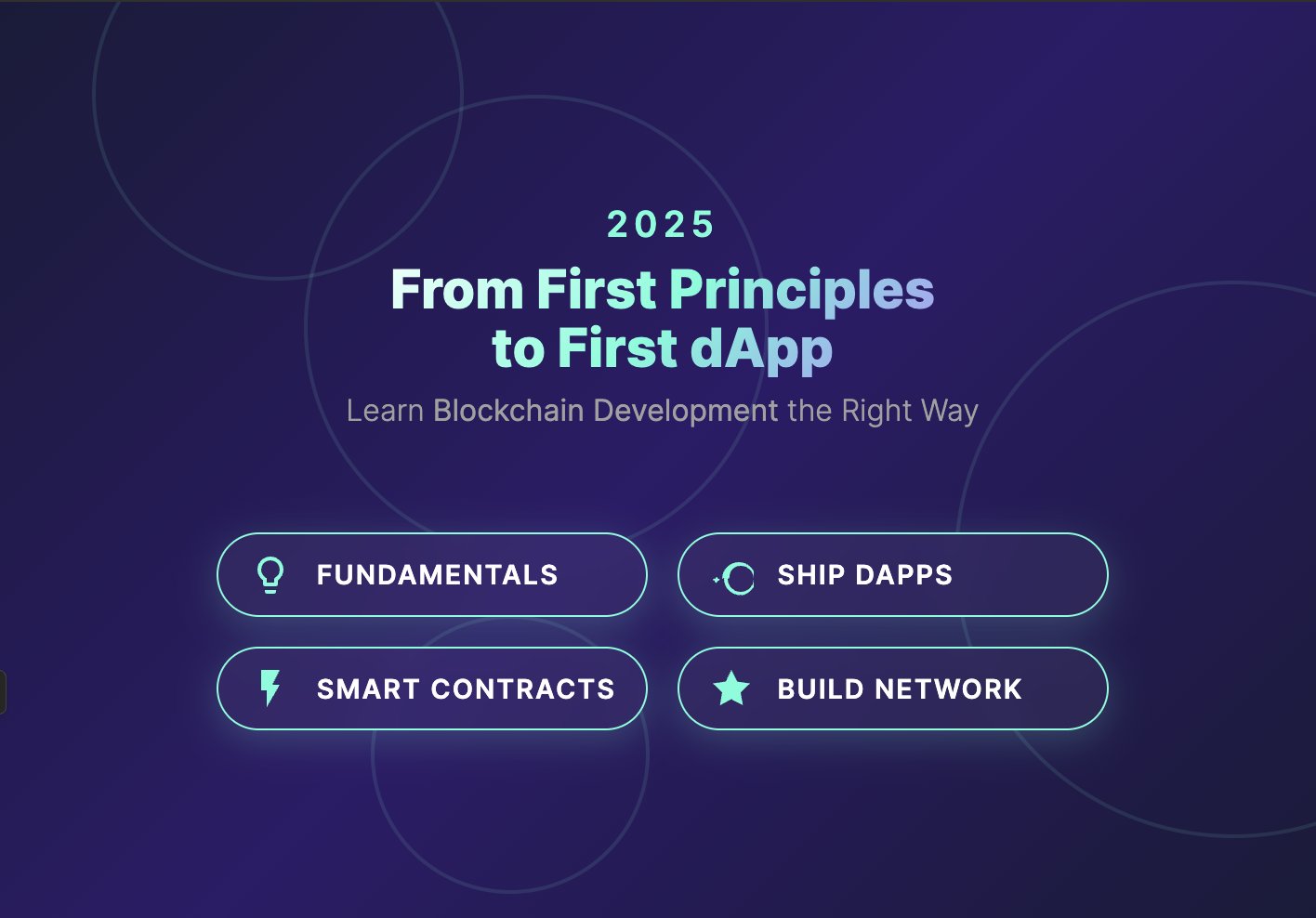
  • From First Principles to First dApp: Learn Blockchain Dev in 2025

    From First Principles to First dApp: Learn Blockchain Dev in 2025

    Have you ever used an app and thought… “Why am I giving away all my data just to use this?”

    Or maybe you’ve wondered:

    Why can banks freeze your money without warning? Why are the games you buy online not really yours? Why do the same tech companies control everything we do?

    The answer lies in one word: trust.

    Or rather, the lack of it.

    That’s where blockchain steps in.

    In 2025, blockchain isn’t just about Bitcoin or NFTs anymore. It’s becoming the foundation for a new kind of internet, one that doesn’t ask you to trust companies, platforms, or middlemen blindly.

    But here’s the problem: most people are stuck on the sidelines.

    They hear the buzzwords. They see the headlines.

    But they don’t know where to start.

    This guide fixes that.

    Whether you’re a student, a curious developer, or someone who just wants to build something real, this is your step-by-step path.

    Real skills. Real tools. A mindset that helps you keep going.

    Let’s start with what really matters, and  the why behind it all.

    We’re still early.

    Ethereum co-founder Vitalik Buterin recently said:

    “There are still many unsolved problems in scalability, privacy, user experience… We need more developers focused on these layers.”

    The reality is this: the blockchain ecosystem is not “done.”

    It’s still being built, and it needs builders.

    Whether it’s making DeFi safer, improving wallets, exploring zero-knowledge proofs, or helping people own their digital identity, there is a real, growing need for smart developers who can understand and ship in this space.

    Why Blockchain? Start With First Principles

    Before we talk about coding, let’s talk about why blockchain exists at all. Because if you don’t understand the “why,” you’ll struggle with the “how.”

    Imagine you want to send money to your friend in another country. Right now, you need banks, clearinghouses, and payment processors. Each one takes a cut. Each one adds delay. Each one becomes a potential point of failure.

    What if you could send that money directly? No middlemen. No extra fees. No waiting three business days for “processing.”

    That’s blockchain’s core promise: removing intermediaries from systems that have always needed them.

    But money is just the beginning. What about voting systems where everyone can verify results? Supply chains where you can track products from farm to table? Digital identities that you actually own?

    Public vs Private Blockchain:

    You’ll come across different types of blockchains. They are not all the same.

    Public Blockchains

    These are open to everyone. Anyone can read, write, and build.

    Examples: Ethereum, Solana, Bitcoin

    Private Blockchains

    These are permissioned. Only selected people can participate.

    Examples: Hyperledger, Fabric

    Many people assume private blockchains are more secure because they offer control. But as Sandy Kaul rightly said:

    “The fewer nodes and simpler security models in private chains make them more vulnerable than public chains.”

    Serge from Chainlink added:

    “All private blockchains will eventually have to connect to public blockchains. Their liquidity and relevance will shrink.”

    That’s why most developers today are building on public chains,  it’s where the action is, and where the opportunities are

    Choosing Your Lane: Types of Chains

    Not all blockchains are created equal. Each has different strengths, different communities, and different opportunities.

    • Ethereum is the most widely used and secure. It’s great for learning and building, but can be slow and expensive during high traffic.
    • Solana is super fast and cheap, best for real-time apps and games. It uses a different coding language (Rust) and has fewer validators.
    • Polygon is a faster, cheaper version of Ethereum. It uses the same tools and is ideal for testing or scaling Ethereum apps.
    • Avalanche offers high speed and flexibility, letting you even create your own custom blockchains.
    • Arbitrum and Optimism are “Layer 2” networks built on top of Ethereum to make it faster and cheaper, using the same code.

    Each has strengths. Start with Ethereum to learn the basics, then explore others as you grow.

    Pick a Niche and Stick (For Now)

    You don’t need to learn every chain.

    Pick one and go deep.

    Examples:

    • Ethereum → Use Solidity + Foundry or Hardhat
    • Solana → Use Rust or JavaScript with Anchor
    • Aptos/Sui → Learn Move language
    • Starknet/Polygon zkEVM → Explore ZK circuits

    Choose one based on what excites you.

    DeFi, NFTs, ZK proofs, gaming, DAOs,  pick your playground

    Core Concepts Before Coding

    Before you write your first smart contract, make sure you understand these fundamental concepts:

    Cryptographic Hashing is how blockchain ensures data integrity. Every block contains a hash of the previous block, creating an unbreakable chain.

    Digital Signatures prove that transactions are authorized by the rightful owner of an address.

    Consensus Mechanisms are how the network agrees on what’s true. Proof of Work, Proof of Stake, and other algorithms each have different trade-offs.

    Gas is the fuel that powers blockchain operations. Every computation costs gas, and understanding this is crucial for writing efficient code.

    Smart Contracts are programs that run on the blockchain. They execute automatically when conditions are met.

    These aren’t just academic concepts. They affect every line of code you’ll write. A smart contract that doesn’t consider gas costs might be too expensive to use. A DeFi protocol that doesn’t understand consensus mechanisms might have security vulnerabilities.

    Smart Contract Security Essentials

    Here’s something that might surprise you: smart contract security is still a mess.

    Samczsun, one of the most respected security researchers in the space, noted that “almost every ticket that we got was a smart contract hack.” This isn’t ancient history. This is happening right now.

    What does this mean for you as a developer? Opportunity. The ecosystem desperately needs developers who understand security.

    Learn about common vulnerabilities like reentrancy attacks, integer overflow, and access control issues. Understand how to use tools like OpenZeppelin’s secure contract libraries. Practice writing tests that try to break your code.

    Security isn’t something you add at the end. It’s something you build in from the beginning.

    Gas Optimisation: Write Efficient Code

    Every operation on the blockchain costs gas. Users pay these costs. Write inefficient code, and nobody will want to use your application.

    Learn how to:

    • Pack storage variables
    • Minimize external calls
    • Use view and pure functions

    This isn’t premature optimization. This is fundamental to blockchain development. A function that costs $50 in gas fees won’t get used, no matter how clever the code is.

    And so on.

    Take a course on this and start learning these techniques

    Don’t Just Learn. Ship.

    This is the most important point.

    You will learn more by building one simple dApp than by reading 50 articles.

    Even if it’s small,  a todo list on-chain, a voting contract, or a basic NFT mint page just ship something.

    Break things. Fix them. Ask questions. Improve.

    Where Are the Opportunities? Jobs, Hackathons, Communities

    Blockchain is not just a tech stack. It’s a community.

    To grow fast:

    • Join hackathons: ETHGlobal, DoraHacks, Encode, Devfolio
    • Explore job boards: Web3.career, CryptoJobsList, Remote3
    • Hang out in Discords and Telegrams of your favorite protocols
    • Learn from:: Cyfrin Updraft, Alchemy University, Speedrun Ethereum and more

    The earlier you show up and ship, the faster you’ll stand out.

    Stay in the Game: Learn in Public

    Building in public is a superpower in the blockchain space. Share your learning journey. Tweet about the bugs you’re fixing. Write about the concepts you’re understanding. Stream your coding sessions.

    This isn’t just about personal branding. It’s about accountability. When you commit to learning in public, you’re more likely to stick with it. You get feedback from the community. You build relationships with other developers.

    Balaji Srinivasan, former CTO of Coinbase, talks about blockchain as the infrastructure for future digital societies. He’s working on projects that use blockchain to create new forms of governance and community. This vision shows blockchain development is evolving beyond financial apps into building tools for entire digital civilizations.

    Checklist: What You Should Have Built After 30 Days

    By the end of your first month, aim to have:

    • Fundamentals of Blockchains
    • A wallet setup (Metamask or others)
    • At least one deployed smart contract
    • A frontend that interacts with your contract
    • A GitHub repo or site link to share your project
    • A basic understanding of gas and security

    A note of 5 things you’d do differently next time

    Blockchain Learning Loop: (Read → Code → Break → Fix → Share → Repeat)

    Learning blockchain development isn’t linear. It’s cyclical. Here’s the loop that works:

    Read documentation, tutorials, and other people’s code. Don’t just skim. Really understand what’s happening.

    Code your own version. Start with copy-paste if you need to, but make sure you understand every line.

    Break things on purpose. What happens if you change this parameter? What if you remove this check? Breaking things teaches you how they work.

    Fix the problems you created. This is where real learning happens. When you fix a bug, you understand the system better.

    Share what you learned. Write about it. Talk about it. Teach someone else.

    Repeat with something more complex.

    This loop works because it combines multiple learning styles. You’re reading, writing, experimenting, and teaching. Each reinforces the others.

    Staying Current and Continuous Learning

    Blockchain evolves fast. Stay up to date by:

    • Subscribing to developer newsletters (Week in Ethereum, Starknet Weekly)
    • Watching talks from ETHGlobal, Devconnect, ZK Summit
    • Reading protocol docs regularly
    • Following devs who ship: Austin Griffith, Patrick Collins, 0xfoobar, and others

    Keep your learning tight. Build in the open. And don’t stop.

    Final Thoughts

    You don’t need to be a genius to become a blockchain developer.

    You just need a clear roadmap, a community, and the courage to start.

    There’s never been a better time to build.

    The tools are better. The community is bigger. The problems are real.

    Blockchain isn’t just about finance anymore.

    It’s about rewriting how the internet works,  and you can be part of it.

    Ready to start your journey?

    Check out our Resource Page( https://blockchainhq.xyz/resources ) to find everything from beginner tutorials to advanced guides

    The blockchain ecosystem is waiting for what you’ll build next🫡
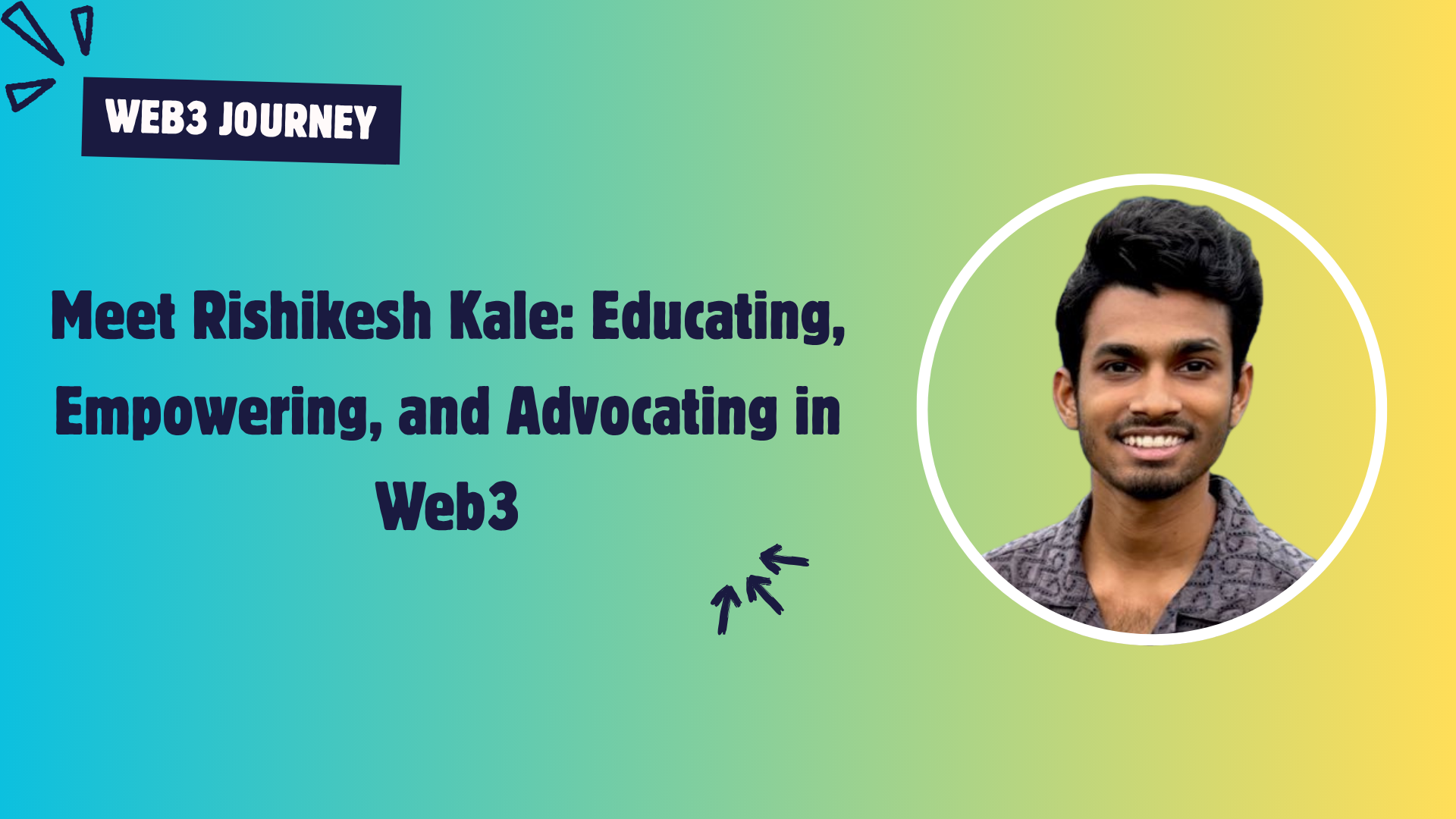
  • Rishikesh Kale: The Web3 Native Who Never Looked Back

    Rishikesh Kale: The Web3 Native Who Never Looked Back

    While his college friends were chasing traditional job placements with attractive packages, Rishikesh Kale made a decision that would define his entire career. He chose to stay in Web3, even when the path seemed uncertain and the resources were scarce. Today, as a Developer Advocate at FIL-B, his story proves that sometimes not going all in on a technology you believe in is the bigger risk, a risk that could mean missing out on the opportunity to shape an emerging field.

    Unlike many who transitioned into Web3 from other careers, Rishikesh Kale took a different path. He started with blockchain right after college, making Web3 not just a career choice but his only industry focus. From winning coding competitions with creative dApps to learning at a time when resources were scarce, his journey reflects what it truly means to grow alongside an emerging technology.

    Based in Nagpur, India, Rishikesh has seen Web3 change from a space where people had to learn coding through games like CryptoZombies to today’s world full of tools and chances. His experience gives a special view of building a career in blockchain from scratch, especially for those who choose to go deep instead of just trying it out.

    This talk with Rishikesh shows the mindset needed to do well in Web3’s early days, why patience matters in a space often linked with quick wins, and real advice for newcomers finding their way through today’s opportunities. His story proves the power of not giving up and the rewards that come to those who truly believe in the future of decentralized technology.

    Rishikesh Kale: The Web3 Native Who Never Looked Back

    The Interview: Rishikesh Kale on His Web3 Journey

    1. Tell us a bit about yourself.

    Rishikesh Kale: I’m Rishikesh Kale, and I’m based in Nagpur, India. Currently, I’m working as a Developer Advocate at FIL-B.

    2. What were you doing before Web3?

    Rishikesh Kale: My journey into Web3 began right out of college; it was my first love and has remained so ever since. I didn’t have a prior career outside of this space.

    3. How did you first hear about Web3?

    Rishikesh Kale: I first heard about Blockchain through my brother. After his introduction, I delved deeper by reading various articles and documentation online.

    4. What was your first step into the space?

    Rishikesh Kale: My real entry point was a hackathon during my college days. My friends and I developed a dApp called Vidhira, a social media platform designed for creators and artists. We ended up winning the hackathon and taking first place!

    5. What was one big challenge you faced early on?

    Rishikesh Kale: One of the biggest challenges I faced early on was the limited availability of educational resources. This was back when Ganache and Remix IDE were still relatively new, and there weren’t many videos or beginner-friendly materials. I largely learned Solidity by playing the CryptoZombies game and then continued my learning from there.

    6. What helped you push through?

    Rishikesh Kale: What kept me going was the desire to implement what I was learning and find opportunities. While waiting for internship opportunities, which felt like a long tunnel, I kept building and participating in more hackathons, knowing that the efforts would pay off eventually.

    7. What are you most proud of so far in your journey?

    Rishikesh Kale: I’m most proud of showing up and not turning back. It was tempting to choose a traditional job when my friends were getting attractive campus placements. However, I chose to stick with blockchain and remained patient, and I’m proud of that decision.

    8. Any major failure or learning moment?

    Rishikesh Kale: Every hackathon has been a significant learning moment for me. Instead of just “bounty hunting,” I always tried to build on new protocols. This approach, while challenging in terms of ideation and execution, taught me a tremendous amount and was a great learning process.

    9. What advice would you give to someone just starting out in Web3?

    Rishikesh Kale: If you’re just starting in Web3, patience is key. It’s rare to hit a jackpot early on. There’s a misconception that Web3 is a space where you can earn a lot of money quickly. While it will definitely pay off one day, it’s not necessarily from day one. Focus on having a solid learning and building journey, and opportunities will follow.

    10. Where can people find or follow your work?

    Rishikesh Kale: You can find or follow my work on Twitter/telegram/linkedIn: @callMeRishhh

    Rishikesh Kale’s story reminds us that Web3 isn’t just about quick financial gains or following the latest trends. It’s about building something meaningful, staying patient during uncertain times, and believing in the long-term vision of decentralized technology. His journey from a college student learning Solidity through games to a Developer Advocate at FIL-B shows that consistent effort and genuine curiosity can lead to remarkable opportunities.

    For those considering a similar path, Rishikesh’s experience offers a valuable lesson: the space rewards those who show up consistently, keep building, and resist the temptation to chase shortcuts. In a world where everyone is looking for the next big opportunity, sometimes the biggest opportunity is the one you’re already working on.

    Ready to start your own Web3 journey? Follow Rishikesh’s approach: start building, participate in hackathons, and focus on learning rather than immediate returns. Connect with him on Twitter @callMeRishhh to learn more about his work and get insights into the developer advocate role in Web3.

    Want to build, learn, and grow in the Web3 space alongside like-minded developers? Join the BlockchainHQ community where builders share knowledge, collaborate on projects, and support each other’s growth. Sign up from here: https://blockchainhq.xyz/auth and follow us on X https://x.com/blockchainhqxyz to become part of our invite only Telegram community where the real conversations happen